

Purchase CD/Listen


Behind The Scenes
CREDITS
Produced by Scott Lehrer & Bálint Varga
Arrangements & Orchestrations by Bálint Varga
Mastered by Oscar Zambrano/Zampol Productions
Recorded at 2nd Story Sound, New York City
Art Direction by Stefan G. Bucher for 344design.com
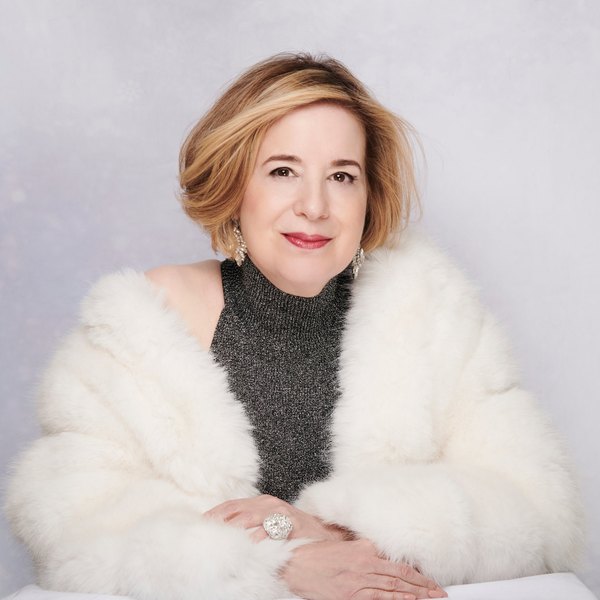
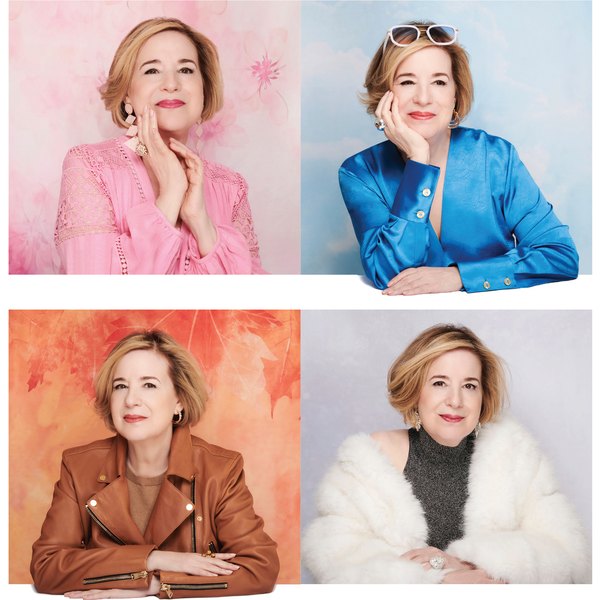
Photo: Helane Blumfield | Makeup: Bridie Coughlan |
Stylist: Michael McGeehan
© Gramercy Nightingale Music Co. All Rights Reserved.
LINER NOTES BY JONATHAN WIDRAN
Admired for her warm, cello-like tone and gift for uncovering hidden gems within the Great American Songbook, Celia Berk approaches singing as an act of nuanced storytelling. With Four Seasons of Song, she continues her evolution not only as an interpreter of song, but as a quietly distinctive artist—crafting a project as ambitious in concept as it is soulful and intimate in execution.
Four season-themed suites, released throughout 2025, are now revealed as an extraordinary song cycle that takes the listener on a gently unfolding year-long musical journey. It’s a fascinating exploration of time—how it moves and how it accumulates meaning—marked by shifting moods, changing perspectives, and moments of graceful connection.
Created in collaboration with arranger/orchestrator Bálint Varga and co-produced by Scott Lehrer, each season carries its own sonic identity: Spring’s light, chanson-inspired chamber music; Summer’s relaxed guitar and ukulele-driven warmth; Autumn’s sweeping, introspective string sextet; and Winter’s buoyant, Django Reinhardt-inspired jazz. Throughout, Celia’s vocals become part of the ensemble itself, woven seamlessly into Varga’s distinctive string arrangements and musical through-lines. At times leading, at times blending, she is always attentive to the narrative, guided by her instinct for lyrical truth and expressive precision.
One of the project’s most fascinating elements is its origin. Producer Lehrer had heard Varga with Alysha Umphress at New York’s 54 Below and immediately sensed a natural alignment between the elegance and sensitivity of Varga’s arrangements and Celia’s aesthetic. At their first meeting, Celia and Varga were drawn together by curiosity and an openness to possibility. Celia proposed a series of recordings organized around the seasons, and they agreed to let the work reveal its direction and shape over time.
That sense of forward motion became essential to the project’s identity. The EPs were conceived, recorded, and released on a rolling basis, with more than one season being worked on simultaneously. The approach required decisiveness and trust—there was little room to second-guess instinct. As Celia would later reflect, the experience was both exhilarating and daunting—an exercise in creative momentum.
At the heart of this evolving collaboration was a dynamic tension between two artistic perspectives. Celia, who approaches music through the lens of storytelling and text, is deeply rooted in the lyrics. Varga, by contrast, focuses first on musical texture and structure. This difference became a source of creative energy, with each challenging and building on the other’s instincts. Over time, they developed a shared language that allowed them to communicate complex ideas quickly, even as the pace of the project accelerated.
From the outset, they shared a wish to build each season using only strings. What began as a practical choice for Spring—violin, viola, cello, and guitar—soon evolved into a unifying concept. The challenge became not only to maintain that core palette, but to reimagine it for each season in a way that felt organic.
Spring emerges as a world of lightness and possibility. Drawing on the elegance of classical art song and the relaxed sophistication of French Riviera jazz, its arrangements feel intimate and gently kinetic, balancing delicacy with subtle rhythmic play. There is a sense of emergence throughout that suggests growth, movement, and the tentative unfolding of something new. Even within songs that hint at melancholy, there is an undercurrent of resilience, a recognition that renewal often carries complexity within it.
With Summer, the atmosphere shifts. The instrumentation opens outward, embracing guitars and ukulele to create what Varga described as an “unplugged beach” sensibility. The sound is warmer, more relaxed, and infused with a sense of play. Here, Celia leans into greater freedom—experimenting with vocal textures, layering harmonies, and embracing moments of humor and lightness. Songs like the buoyant KNEE DEEP (popularized by the Zac Brown Band and Jimmy Buffett) and the wistful THE GIRLS OF SUMMER (born from Stephen Sondheim’s incidental music for the 1956 play by N. Richard Nash) capture different facets of the season: the former carefree, the latter tinged with a sense of impermanence. Even at its most playful, Summer carries an awareness that these moments are fleeting.
Autumn represents a deepening. Expanding the string writing into a fully realized sextet, Varga creates arrangements that are more structured, expansive and soul-level demanding. This is not simply a season of endings, but of what Celia describes as an “inward gathering”—a time to reflect, to take stock, and to recognize both loss and growth as intertwined experiences. The music breathes differently here, with longer lines, richer harmonies, and a heightened sense of dramatic contour.
Within this landscape, certain songs take on a particular resonance. Wells Hanley’s INDIAN SUMMER, which Celia first heard performed by singer Lisa Viggiano, becomes almost aria-like in its dramatic scope—a meditation on a love that arrives unexpectedly, departs too soon, and yet leaves an enduring imprint. Celia’s phrasing unfolds with patience and gravity, allowing the song’s narrative to settle gradually into the listener. Similarly, Varga’s reimagining of Earth, Wind & Fire’s SEPTEMBER transforms a familiar anthem into something more introspective and luminous, revealing layers of nuance often obscured by its more exuberant incarnations.
If Autumn is about gathering, Winter is about release—and, perhaps unexpectedly, celebration. Rather than leaning into austerity, Celia and Varga conclude the cycle with a sense of joy and forward motion. Drawing inspiration from Django Reinhardt and the traditions of “gypsy jazz,” the arrangements are lively, rhythmic, and infused with a spirit of communal energy. Violin, guitar, and bass interact with a newfound looseness, creating space for spontaneity and play.
This tonal shift is both deliberate and essential. Having explored themes of reflection and loss in Autumn, Celia and Varga resist the idea of extending that into Winter. Instead, they envision the season as a moment of connection—a time when people gather, celebrate, and look toward the possibilities of a new year. Songs like LET’S START THE NEW YEAR RIGHT and LOVE TURNS WINTER TO SPRING embody that perspective, offering not resolution, but renewal.
The project concludes with a brief Epilogue: an intimate rendering of SEASONS OF LOVE from Rent, performed with Varga at the piano. Stripped of the instrumental framework that defines the rest of the cycle, it is a quiet acknowledgement of the special collaboration at the project’s core.
What started as a creative experiment evolved into something far more ambitious. Heard individually, each season offers a compelling musical world. Experienced together, they form a unified, deeply considered artistic statement.
Though the focus is clearly on the dynamic interplay between Celia and Varga, the role of producer Scott Lehrer cannot be overstated. His understanding of Celia’s voice and instincts ensures continuity across the project’s shifting landscapes. And through subtle remastering and the shaping of space between tracks, transitions that once marked seasonal boundaries begin to feel like natural continuations.
Four Seasons of Song resists easy categorization. It is not simply a collection of recordings, nor is it a conventional concept album. It is, instead, an invitation: to listen closely, to notice tone and texture, and reflect. Like the seasons themselves, it does not arrive at a final destination. It circles back, begins again, and reveals new meaning with each return.
Jonathan Widran, Spring 2026
Jonathan Widran is a veteran music and entertainment journalist, writer, and content creator. Best known for his work in the jazz, new age, and contemporary music scenes, he has been a frequent contributor and editor for major publications, including the Los Angeles Times, Billboard.com, Music Connection, Jazziz, and AllMusic, and currently operates the review site The JW Vibe.
ABOUT THE SEASONS
SPRING
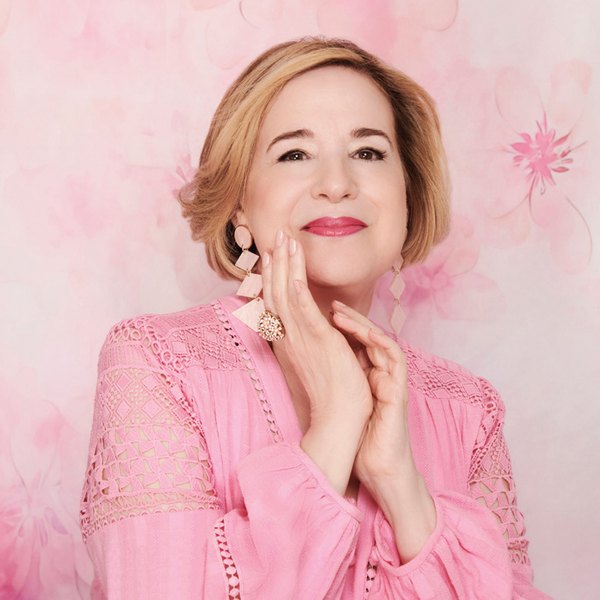
Seoyeon Im, violin
Mario Gotoh, viola
Laura Metcalf, cello
Kevin Kuhn, guitar
Recorded by Scott Lehrer; Piotr Garbaczonek, Assistant Engineer
Mixed by Scott Lehrer
CELIA:
In early 2024, my friend and record producer Scott Lehrer spotted Bálint Varga at Alysha Umphress’s show at 54 Below. Knowing I’m always on the lookout for new collaborators, he texted me the next morning to suggest I check out her “smart, tasteful, very talented” music director. I quickly tracked him down, and we met for coffee. I have lots of ideas for lots of projects, and as we talked it seemed to me that my idea to do a series of EPs organized around the four seasons was the easiest way to see if we were sympatico. Bálint was intrigued, and we immediately talked about giving each season a distinctive sound. And we agreed to start with Spring.
BÁLINT:
For any writer, arranger, or orchestrator, the purest joy in music making comes when an artist completely trusts them and grants full creative freedom. Working with Celia on this album has been an incredibly fulfilling experience. She’s adventurous, intelligent, nuanced, and artful. She brought her own bold ideas and sensitivity to every arrangement, and we shared the goal of creating something artistically compelling. And so, here’s the first season of four.
SUMMER
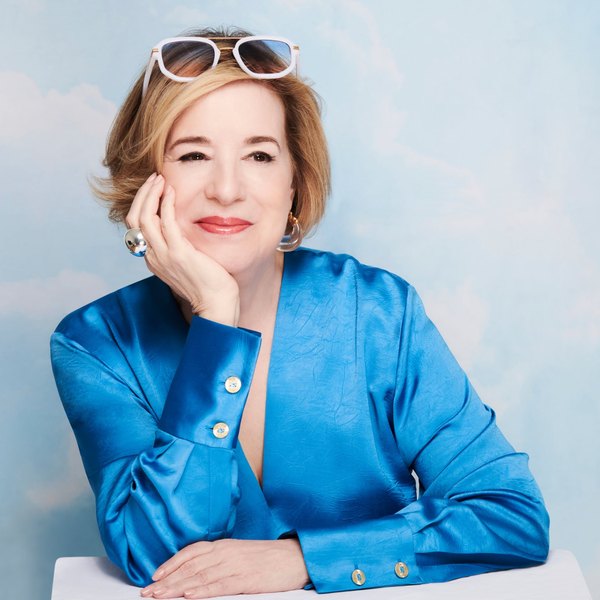
Ethan Hack-Chabot, guitars and ukulele
The Gramercy Nightingales, vocals (Track 7)
Recorded by Alex Venguer; Michael Gorlin & Piotr Garbaczonek, Assistant Engineers
Mixed by Alex Venguer
CELIA:
This is the second suite of songs in our FOUR SEASONS OF SONG EPs. Compared to Spring, the vibe is much more relaxed. And Bálint has given me opportunities to do new things stylistically.
When people listen to these tracks, they may think they are hearing multiple musicians. In fact, there is only one musician — one wonderful musician — playing all of Bálint’s incredible, layered arrangements. It is such a pleasure to be joined by Ethan Hack-Chabot on guitars and ukulele.
BÁLINT:
We wanted to make a big contrast between seasons in the arrangements and instrumentation. We’re really playing with styles, ranges and articulations. For Spring, we had violin, viola, cello and guitar. For Summer, we decided to only use guitars — electric and acoustic — and ukulele, to bring a freshness and playfulness before foreshadowing Autumn with Sondheim’s THE GIRLS OF SUMMER.
AUTUMN
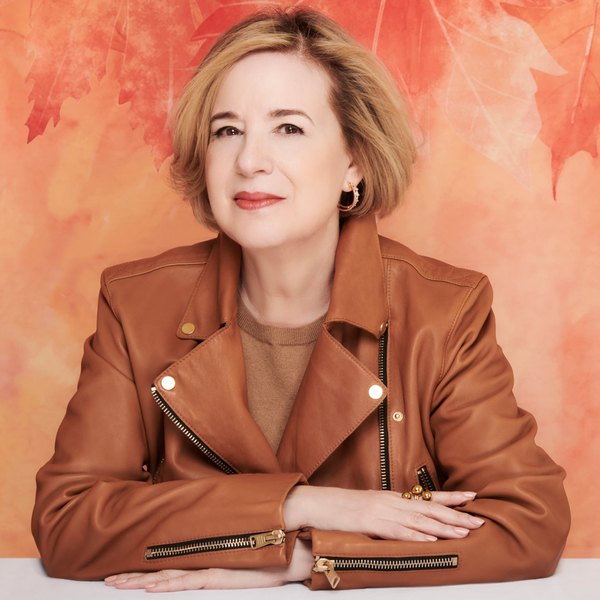
Kiho Yutaka, violin
Allyson Clare, viola
Malachi Brown, cello
Recorded by Alex Venguer & Ian Kagey; Jeff Cook & Piotr Garbaczonek, Assistant Engineers
Mixed by Alex Venguer
CELIA:
Autumn is the culmination of a growth cycle: the season of taking stock. For our Suite, we looked for songs that conveyed a kind of inward gathering. They express loss, reaching maturity, and ultimately a determination to keep moving forward. Bálint’s orchestrations for string sextet are both wistful and sweeping, taking deep breaths and then releasing.
BÁLINT:
Autumn has always been my favorite season. The year isn’t over yet, but by this time, we’ve come a long way and learned so much about ourselves — it’s a natural moment for reflection. For me, it’s the most exciting part of the year: the turning leaves, the crisp breeze, and the softer sunlight create the perfect atmosphere for inspiration. It’s a season to gather new thoughts, let go of what no longer serves us, and prepare for what’s to come. Musically, we set out to capture that feeling — a state of reflection and growth, carried by a sense of hope and quiet comfort.
WINTER
Seoyeon Im, violin
Ken Maletkova, guitar
Trevor Robertson, bass
Recorded by Scott Lehrer; Michael Gorlin, Assistant Engineer
Mixed by Scott Lehrer
Piotr Garbaczonek, Assistant Mastering Engineer
CELIA:
Winter is the final season of our year-long recording journey, and we wanted to go out on a high note! We don’t consider it an ending — it’s the pivot to a new annual cycle. We’ve tried to express that through song choices and arrangements that are celebratory and anticipatory.
All year long, we were living in multiple seasons musically – the one we were releasing and the one we were recording. Before embarking on our Winter Suite, I knew I needed to take a deep breath and think about everything I had learned from and with everyone. So I asked Bálint to provide lots of room to play. We both agreed that meant leaning into the jazz end of the style spectrum. And, once again, he exceeded anything I could have imagined.
We hope you have as much fun listening to these tracks as we had recording them. And we’ve added a little surprise at the end, to sum things up.
BÁLINT:
For me, Winter is the most exciting time of the year. The holidays, gathering with family and loved ones – it’s just full of joy.
When working on the arrangements, I wanted to capture that upbeat energy with some fun, lively music. I’ve long admired Django Reinhardt’s style and felt his incredibly spirited sound would be a perfect match for our final season.
Celia doesn’t just love jazz, she sings it in a uniquely personal way. So this felt like a perfect way to conclude our year-long journey through such a wide range of styles.
ABOUT THE SONGS
SPRING
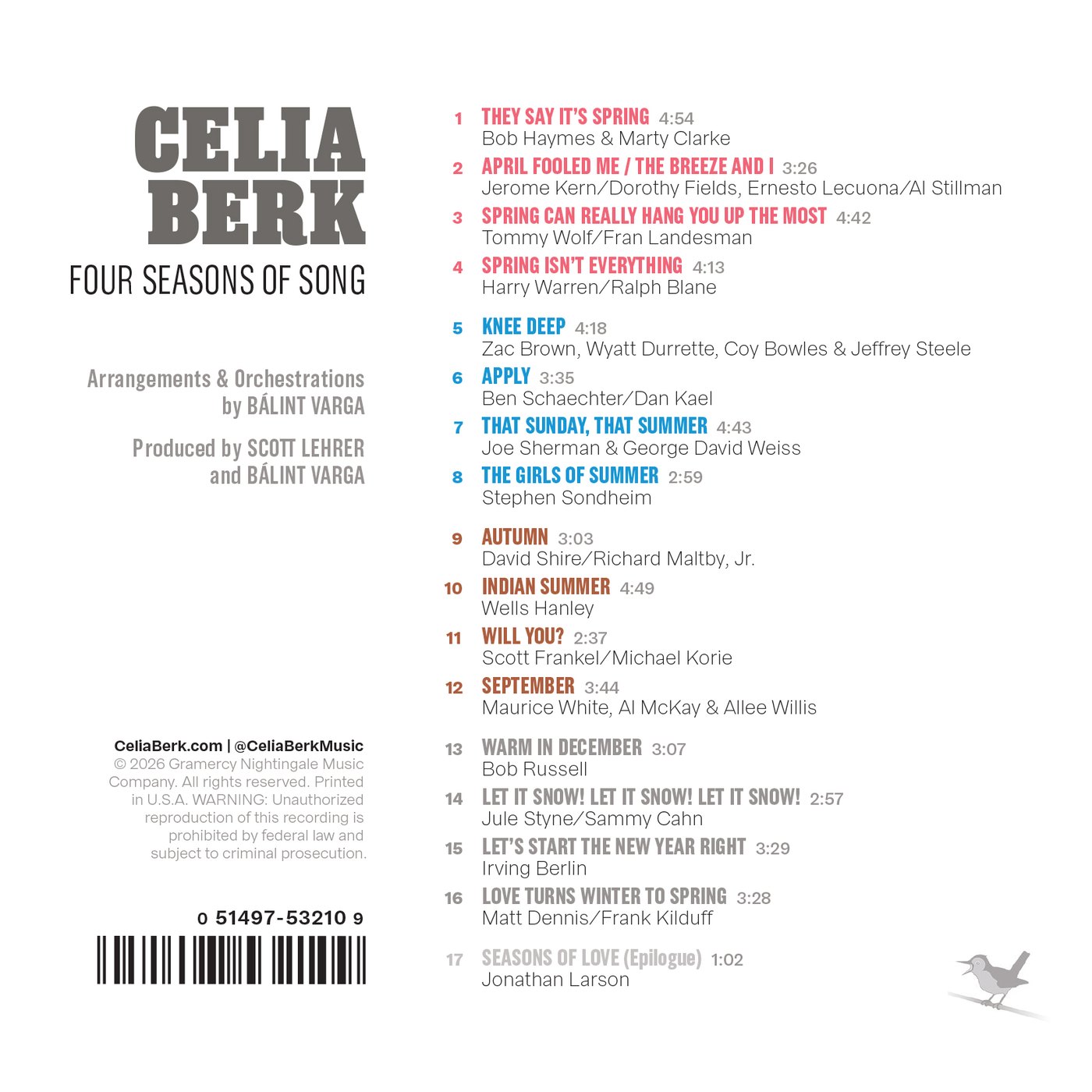
Track 1 - THEY SAY IT’S SPRING
Words and Music by Bob Haymes & Marty Clarke
Della Blue Music LLC o/b/o Jatap Publishing Co.
CELIA:
This charming song was first recorded by Blossom Dearie in 1958. If you know her voice, you know that original version conveyed the sweet “light as a feather” promise of Spring. It’s attracted a number of other lovely singers, and it’s the kind of hidden gem that attracts me. It seemed a fun start to this “Spring Suite” of songs and my new collaboration with arranger/orchestrator Bálint Varga.
Track 2 - APRIL FOOLED ME / THE BREEZE AND I
Music by Jerome Kern/Lyric by Dorothy Fields
Music by Ernesto Lecuona/Lyric by Al Stillman
Reservoir Media Management, Inc. and Universal Music Publishing Group, Round Hill Music
CELIA:
Jerome Kern is one of my favorite songwriters, and Dorothy Fields is the most elegant of lyricists. For APRIL FOOLED ME, her words were added to Kern’s melody a decade after his death. Kern’s widow had married singer George Byron, and they asked Fields to pen the lyric. Byron then included it on an album of new and rediscovered Kern songs. In the liner notes, George Frazier detected “muted suggestions of Chaucer and T.S. Eliot”, calling it “one of the most haunting passages in the annals of popular song lyric-writing.” But it remains amongst the lesser-known songs from this songwriting team whose THE WAY YOU LOOK TONIGHT earned them an Academy Award for Best Original Song.
As we explored it, Bálint and I felt it was a bit short and would benefit from a carefully chosen pairing with another song. I pulled out all my songbooks and spotted THE BREEZE AND I, which seemed to comment on the situation described in APRIL FOOLED ME and become a kind of bridge section. Bálint then “wafted” fragments of THE BREEZE AND I in and around the violin solo.
Track 3 - SPRING CAN REALLY HANG YOU UP THE MOST
Music by Tommy Wolf/Lyric by Fran Landesman
Fricon Music Co. o/b/o Wolfland
CELIA:
This is probably the best-known song in this EP, and it’s been recorded by some of the greatest singers of the Great American Songbook. Wolf and Landesman brought the language and vibe of the Beat Generation into their songs. For this one, Landesman had asked jazz musicians to put into their own words the phrase “April is the cruelest month”, which is the opening line of T.S. Eliot’s “The Waste Land”. I’m not sure how I ended up with two songs in this EP that echo T.S. Eliot – it certainly wasn’t deliberate! But it says something about the kinds of literate lyrics that attract me.
SPRING CAN REALLY HANG YOU UP THE MOST is often done at a slower tempo, leaning into the sadder aspects of the words. But I zeroed in on the phrase “All I’ve got to show’s a splinter for my little fling” and asked Bálint to aim for wistful, self-deprecating and somehow resilient.
Track 4 - SPRING ISN’T EVERYTHING
Music by Harry Warren/Lyric by Ralph Blane
Four Jays Music Pub.
CELIA:
I love Harry Warren’s music, and recorded FRIENDLY STAR from the movie Summer Stock on my debut album You Can’t Rush Spring. Warren’s name might not be as instantly recognizable as some of his songwriting peers, but his songs certainly are, including 42nd STREET, LULLABY OF BROADWAY, AT LAST and so many more. SPRING ISN’T EVERYTHING was written for Walter Huston to sing in the movie Summer Holiday based on Eugene O’Neill’s play Ah, Wilderness, but was cut from the final version. Warren considered it among his best songs, and I consider it a true gem by a truly great songwriter.
Bing Crosby once asked Warren who his musical inspiration was, and he said, “Puccini”. So perhaps I was channeling that when I asked Bálint to open up the sequence “when Summer… and Autumn…and Winter…sing!” when it repeats after the instrumental section. Bálint makes it almost operatic. And Ralph Blane’s lyrics for SPRING ISN’T EVERYTHING gives us a perfect way to sum up our take on Spring, and pivot to the three seasons still to come.
SUMMER
Track 5 - KNEE DEEP
Words and Music by Zac Brown, Wyatt Durrette, Coy Bowles & Jeffrey Steele
Angelika Music, Weimerhound Music and Poppsolotamus Music
CELIA:
How many singers do you know who can say that one of their recordings was inspired by a two year old’s love for the music of a country/folk band? My niece had posted pictures on Instagram of her son at the beach, accompanied by a clip of the Zac Brown Band’s KNEE DEEP. I thought it was a really fun song and added it to my list of possible seasonal material. I learned that it was one of my grandnephew’s favorite songs, and saw him break into a toothy toddler smile when he heard the Band’s version featuring Jimmy Buffett.
For my version, Bálint relaxed the song a bit and created a fun ukulele and guitar instrumentation. I knew we were on the right track when my grandnephew started waving away the Zac Brown version and insisting on listening to the rough mix of mine. I’ll take that kind of critical endorsement any day!
Track 6 - APPLY
Music by Ben Schaechter/Lyric by Dan Kael
Ben Schaechter and Dan Kael
CELIA:
In 2016, my friend Binyumen (“Ben”) Schaechter invited me to join the cast of a revival of It Helps To Sing About It, a revue of songs written with lyricist Dan Kael. I accepted with pleasure and with curiosity about what the other cast members would be singing. One song that immediately caught my ear was APPLY, which was sung by the wonderful Marissa Mulder. Marissa has a distinctive voice that evokes Blossom Dearie, so the risqué lyrics landed as though without guile. I remember admiring the song, admiring her interpretation, and promising myself that I would sing it in my own very different vocal range someday.
My first opportunity was in June 2018, at Manhattan’s Beach Café. What better way to begin a set than with a song talking about making “a friend at the beach”? It was still on my mind in 2024 when Marissa and I ended up on another evening of music together. I told her I wanted to record APPLY, without being completely sure when that opportunity would arise. But a few months later, when I handed Bálint a stack of possible Summer songs, it was up at the top. I was delighted that he immediately agreed to include it, and that Ben and Dan gave me the rights to do its first commercial recording.
DAN:
Ben and I wrote our first version of APPLY in 2008 as a submission for Hangin’ Out, a co-ed naked revue that Bob Schrock was developing as a sequel to his internationally successful — and male-only — Naked Boys Singing. As it turned out, Hangin’ Out never got past its initial limited run, and APPLY wasn’t even accepted for that. (Go figure.) Eight years later, when Ben and I were pulling songs together for our own revue It Helps to Sing About It, we retrieved APPLY, re-wrote the too-wordy bridge, cut one verse, and ended up with a fun song that even a fully dressed woman could sing. When that woman turned out to be the radiant Marissa Mulder, we felt duly rewarded for our efforts.
We were thrilled when Celia approached us about recording APPLY. Pleased as I was by the prospect, I shared a concern (yes, I tend to worry too much) — would the humor come across without an audience? Doesn’t the song need chuckles to propel it along? Celia immediately put me at ease. She reminded me that the song isn’t just a collection of clever lines, but rather a progression. In the end, it’s not about applying sunscreen; it’s about reaching out for what — or who — you want.
When a singer of Celia’s caliber pitches your own song to you, you can only say “Yes! Thank you!”
BEN:
I first met Celia in 2011, when she and music director Alex Rybeck were looking for a Yiddish song about a bird. A very niche request… which eventually led to my creating a singable translation of Puccini’s “O, mio babbino caro” as the centerpiece of her YIDDISHA NIGHTINGALE number. That became one of her signature songs, and that was the beginning of our beautiful friendship.
Separately, Celia took an interest in the (English) songs I wrote with Dan, and in 2013, after performing MY APARTMENT a number of times, she asked us to write a comedy number for her based on her frustrations performing in cabaret rooms. She brought down the house with that song, I’LL WAIT, in our show It Helps To Sing About It, and then again at the 2018 Bistro Awards. One of her performances of it can be found on YouTube.
Relatedly, also in 2013, we rewrote one of our ballads for Celia, MANHATTAN IN JULY, using her suggestion to take the lyric of the last verse in a different direction. She ended up performing that number beautifully and soulfully in our show, as well – and that, too, can be found on YouTube.
So, it’s kind of funny that the first song of mine and of ours that Celia has decided to go into a studio and record, APPLY, isn’t any of the ones we composed, translated, or revised with her in mind! To quote the old Yiddish adage, “Who’da thunk it?”
When we wrote APPLY in 2008, it was in the typical Schaechter-Kael sequence: Dan would write the intro, and once we agreed on it, I then set it to music. Then he wrote an A section, and I set *that* to music, and then after he wrote the 2nd A, he continued with the B section, for which I then contributed my part, and the same with the rest of the lyric including the coda. We were sure it was a shoo-in for the revue Hangin’ Out that Dan mentioned… but the director informed us that they couldn’t use it because the dance break in the middle mentioned a comically large bottle of sunscreen, and they wanted to do the show without props. (!) Over the years, I’ve had plenty of opportunities to sing the song myself for small groups, and each time, in doing so, I relished channeling my inner Marilyn Monroe… With Celia’s rendition, she doesn’t look to do the same… but rather, channels her inner Celia Berk, which works wonderfully for me!
Track 7 - THAT SUNDAY, THAT SUMMER
Words and Music by Joe Sherman & George David Weiss
Concord Music Group, Inc. o/b/o Abilene Music LLC and Sony/ATV Tunes LLC o/b/o Erasmus Music Inc.
CELIA:
As Bálint and I were looking at Summer songs, I told him how much I had enjoyed doing backups for Irving Berlin’s MANHATTAN MADNESS on my Manhattan Serenade album. That marked the debut of my “sisters” The Gramercy Nightingales, a girl group named after my record label. I asked if we could find a suitable song for Wren, Robin and Lark to return to the recording studio, this time singing three-part harmony.
We agreed THAT SUNDAY, THAT SUMMER fit the bill perfectly. If you know the song, you probably know Nat King Cole’s iconic 1963 swing ballad version. Joe Sherman and George David Weiss share the songwriting credit, but Sherman wrote the music and Weiss (who wrote the lyrics for LULLABY OF BIRDLAND, TOO CLOSE FOR COMFORT and WHAT A WONDERFUL WORLD) wrote the words.
Bálint wrote close harmony and vocal stylings à la The Boswell Sisters, and the Nightingales went off to learn their individual parts. Kudos to engineer Alex Venguer for keeping the girls in balance with each other and with Ethan’s acoustic and electric guitar parts.
Track 8 - THE GIRLS OF SUMMER
Words and Music by Stephen Sondheim
Chappell and Co.
CELIA:
As we did with our Spring Suite, the fourth song of this EP serves as a pivot to the next season – in this case, Autumn. It moves us from a laid-back sense of summer enjoyment into something more reflective and wistful.
The song began its life as incidental music for S. Richard Nash’s 1956 play The Girls of Summer. Producer Cheryl Crawford asked Sondheim to write a trumpet solo to be played by one of the characters. She told him to approach it as a theme to which he could add lyrics, with the intention that the song would eventually be used for promotional purposes. So the song title was set before Sondheim began to write. He later said that this was his second attempt at imitating Harold Arlen, and he wrote with Lena Horne in mind. It’s not a stretch to imagine her singing it, and it’s a shame she never did! (That makes it the second song inspired by Horne that I’ve recorded. Ann Hampton Callaway wrote YOU CAN’T RUSH SPRING with Horne in mind, and that one almost made it onto Horne’s last album.)
A lot of wonderful singers have picked up THE GIRLS OF SUMMER, and I appreciate that Bálint found a distinctive sound for our version. Ethan’s electric guitar is certainly a striking contrast to other arrangements, and it challenged me to be equally sharp, pointed and bluesy in my vocals. Not a hard assignment when you have Sondheim lyrics to work with, especially ones with such an interesting final twist.
AUTUMN
Track 9 - AUTUMN
Music by David Shire/Lyric by Richard Maltby, Jr.
Warner Chappell Music Ltd.
CELIA:
We both thought that these lyrics (“my spring and summer dreams seem lost now”) served as the perfect pivot from our first two Suites into this third season of songs.
I’ve loved AUTUMN since hearing it on the cast album of Starting Here, Starting Now, a revue of songs by Maltby and Shire they described as mini-dramas set to words and music.
AUTUMN was the first song they wrote together, as undergrads at Yale in the late 1950’s, and it’s from their junior year musical Cyrano de Bergerac. There is a stunning version by Barbra Streisand on her Color Me Barbra album. As is the case with all Streisand recordings, I had to work hard to keep her inflections out of my head. But Bálint’s arrangement is so distinctive that it guided me to “our” interpretation.
Track 10 - INDIAN SUMMER
Words and Music by Wells Hanley
Wells Hanley Music
CELIA:
In March 2024, I attended a wonderful evening of music by my friend and fellow cabaret performer Lisa Viggiano, featuring her collaboration with Pianist and Musical Director Wells Hanley. A highlight for me was INDIAN SUMMER, written by Wells and perfectly suited to Lisa’s warm voice and soulful persona. Admiring the song, and already deep into finding material for my new seasonal project, I asked Lisa if she would mind my asking Wells for a copy. Characteristically generous, she immediately shared the lead sheet.
INDIAN SUMMER quickly rose to the top of the stack of Autumn songs that Bálint and I were considering, and a year later Lisa put me in touch with Wells while finalizing her own recording for release. (It’s streaming on all platforms, and I highly recommend it.)
It’s always a gift when a singer can talk to a songwriter, and I always have lots of questions and ideas to discuss. But before I could do that, Wells shared a link to his podcast “I Wrote This Song For You,” where he used his music to “help people feel seen and appreciated and loved.” He explained that he writes songs based on true life stories, and INDIAN SUMMER is the story of “Sophie,” who found the love of her life late in her life.
In her episode of the podcast, Sophie described the experience of finding Dan as being like “a song played in my body.” Their story began with an intense dream Sophie had one night in Overall, her farmhouse in the Shenandoah Valley. She later learned that, at that same time, Dan was walking above her house on the Appalachian Trail. Less than a year after they came together, she was plunged into “the deepest deluge of pain” at Dan’s untimely death. Processing her grief, she came to the realization that “you don’t expect a miracle to stay.” Now determined to “keep walking the path” of her life, she told Wells that his song made her feel like she and Dan were “on top of the mountain forever.”
I invite you to keep that back story in mind as you listen to what Wells crafted to convey Sophie’s profound and magical experience, coupled with Bálint’s almost cinematic arrangement for violin, viola and cello. To my ear, it is now a kind of aria.
WELLS:
Hearing Celia’s interpretation of INDIAN SUMMER has been a rare and moving experience for me as a songwriter. It is the first time one of my songs has been recorded without my direct involvement, and she has brought it to life in a way I could not have expected, and yet it felt instantly familiar.
Though I wrote INDIAN SUMMER in an explosion of emotion, Celia’s performance carries a kind of wisdom that seems to unfold through time. In her hands, the song feels like an ancient tale freshly told; her shaping of the compound meter lends it the lilt of an old Irish air – an unexpected touch, yet perfectly attuned to the song’s natural imagery of a landscape steeped in mystery and legend.
Bálint’s arrangement for strings is cinematic but never obvious, often complex, sometimes even emotionally demanding – and always in service of the story’s emotional depth. Through it all, Celia’s pacing, unhurried and assured, allows the story to breathe and settle into a profound resonance.
For me, it is a reminder that a song’s life does not end when it leaves the writer’s hands – it begins again every time a singer of Celia’s depth breathes her unique life into it and makes it her own.
Track 11 - WILL YOU?
Music by Scott Frankel/Lyric by Michael Korie
Staunch Music c/o Concord Music Group, Inc. d/b/a Concord Sounds and Korie Music c/o Concord Music Group, Inc. d/b/a Concord Sounds
CELIA:
I’ve long admired the score of Grey Gardens, the musical based on the documentary of the same name about Edith Ewing Bouvier Beale and her daughter Edith Bouvier Beale. In fact, ANOTHER WINTER IN A WINTER TOWN from Act 2 was on our master list of music to be considered for these seasonal EPs.
But it was ultimately WILL YOU? — removed from its context in the show (it’s the final number of Act 1, set in 1941) — that fit our criteria for Autumn. Its melody cannily evokes a bygone era. And the lyrics “Time rushes by, memories fade, dreams never do” have the balance of loss and looking to the future that we were looking for.
Track 12 - SEPTEMBER
Words and Music by Maurice White, Al McKay and Allee Willis
Rhythm Records Inc. d/b/a Steelchest Music, EMI April Music Inc., EMI Blackwood Music Inc., and Irving Music, Inc.
CELIA:
Yep, it’s the Earth, Wind & Fire song. But don’t worry, I didn’t attempt funk!
I put the song on the pile of possible Autumn songs, curious what Bálint’s reaction would be, and he grabbed it with both hands. What you’re hearing is what he almost immediately pitched to me. Throughout this Autumn Suite, he was aiming for a pop sensibility with a classical sound, and SEPTEMBER became a kind of cosmic incantation that to me echoes the mysticism of INDIAN SUMMER in a very contemporary way.
WINTER
Track 13 - WARM IN DECEMBER
Words and Music by Bob Russell
Music Sales Corporation
CELIA:
I was pointed towards this song by Peter Wagenaar, a radio presenter in South Africa who has been playing my recordings since my first album. As I would send him advance copies of the most recent seasonal Suite, he would send me thoughts on the seasons to come.
My eye and ear gravitated towards WARM IN DECEMBER, which was introduced by Julie London in 1956, and has most recently been covered by Samara Joy. Its sly lyrics seemed the perfect way to raise the curtain on our playful approach to this season.
Track 14 - LET IT SNOW! LET IT SNOW! LET IT SNOW!
Music by Jule Styne/Lyric by Sammy Cahn
WB Music Corp. o/b/o Cahn Music Company and Chappell and Co. o/b/o Producers Music Publishing Co.
CELIA:
It’s hard to believe this is the first time I’m recording a Jule Styne song, and what a great one it is. I’ve been singing it since elementary school, and Bálint has given it a knowing, adult vibe without losing its childlike sense of fun. And those Sammy Cahn lyrics certainly support that approach.
Styne and Cahn actually wrote it in Hollywood during a heat wave. It was first recorded by Vaughn Monroe and released after Thanksgiving in 1945. It was an immediate hit, reaching No. 1 on the Billboard Best Sellers chart for five weeks after Christmas. Since then, many great singers have covered it.
Special thanks to my backup singers, who I’ve dubbed “The Snowballs.” It’s the three musicians (Seoyeon Im, Ken Maletkova and Trevor Robertson), Bálint, and our studio photographer Hannah Jane (a wonderful singer in her own right). And that’s Bálint on the sleighbells.
Track 15 - LET’S START THE NEW YEAR RIGHT
Words and Music by Irving Berlin
Irving Berlin Music Company
CELIA:
I’ve loved this Irving Berlin song since hearing it in the 1942 movie Holiday Inn. Bing Crosby did the first recording, with Bob Crosby and His Orchestra. In fact, it was the B side for his recording of WHITE CHRISTMAS. That’s my kind of hidden gem!
Bálint’s “gypsy jazz” arrangement offered us all lots of room to improvise and gave me the opportunity to do some vocalese. Special thanks to my friend and engineer Scott Lehrer for letting me try lots of different things and then choosing the best options.
Track 16 - LOVE TURNS WINTER TO SPRING
Music by Matt Dennis/Lyric by Frank Kilduff
Maxey Music Company
CELIA:
It took a while to settle on this last song in our last seasonal Suite. We wanted something that would gently pivot out of Winter and connect the dots with our Spring Suite. But nothing seemed to quite fit the bill.
I did a deep dive online, by key word and by singers I admired. That led me to June Christy and her track on the Christmas Hidden Gems, Vol 1 compilation album. She had recorded the first cover of this song, after it had been introduced by The Four Freshmen.
Songwriter Matt Dennis went on to write some great standards including ANGEL EYES, EVERYTHING HAPPENS TO ME and LET’S GET AWAY FROM IT ALL. But his lyricist presented something of a musical mystery. The sheet music (from an old issue of Sheet Music magazine where it was featured as a “Forgotten Gem”) credited the lyrics to “Brigham Townshend.” And the copyright was by Matt Dennis and “Brigham Townsend.” But when I purchased the mechanical license, the lyricist was Frank Kilduff. Hmmm. Off I went to the encyclopedic Will Friedwald, who instantly sent me a picture of the label from June Christy’s Gone For The Day record. It credited Frank Killduff as the lyricist. Double Hmmm. Will pointed me towards the ASCAP database, which credited Kilduff with one L. So that’s who I’m crediting and how I’m spelling it. If you have any other insights, please share them!
EPILOGUE
Track 17 - SEASONS OF LOVE (Epilogue)
Universal Music Corp. and Finster and Lucy LLC
Bálint Varga, piano
Recorded and Mixed by Scott Lehrer
Piotr Garbaczonek, Assistant Mastering Engineer
CELIA:
The idea of an Epilogue was a flash of inspiration by Bálint, and the arrangement was his gift to me to mark the end of our project together. It’s meant as a parting thought after FOUR SEASONS OF SONG.
Bálint immediately proposed SEASONS OF LOVE from Rent. I had some other ideas, and he left the final choice to me. Not surprisingly, I was leaning towards something less familiar. But because we were going to do an abbreviated version of whatever we chose, I ultimately agreed that the listener had to quickly recognize the song and hopefully even know the words.
Bálint arranged two versions of different lengths. Unsure which would have the desired effect until we heard it in context, we recorded them both. What you hear is the shorter version, and I have the longer arrangement tucked in my back pocket for future use.
I’m so glad we ended this journey with me at the microphone and Bálint at the piano. I think you can hear that we communicate very well with each other. We ought to — we created 17 tracks featuring 10 musicians for four EPs, each with a distinct musical style, over the course of one crazy year.
Acknowledgments
How do you measure a year? In…
Musicians: Malachi Brown, Allyson Clare, Mario Gotoh, Ethan Hack-Chabot, Seoyeon Im, Kevin Kuhn, Ken Maletkova, Laura Metcalf, Nick Pauly, Trevor Robertson, Kiho Yutaka and The Gramercy Nightingales
Engineers: Alex Venguer; Ian Kagey; Jeff Cook, Piotr Garbaczonek and Michael Gorlin; Mastering Engineer Oscar Zambrano guiding four EPs into a cohesive album
Songwriters: Wells Hanley, Dan Kael & Ben Schaechter
Creatives developing the project’s visual identity: Photography: Helane Blumfield with Bridie Coughlan, Chris Dinerman, and Michael McGeehan; Hannah Jane; Conor Weiss • Design: Stefan Bucher, Cathy Solarana • Digital Content: Shoshana Feinstein with Aaron Dix; Tim Moraitis; Josh Okun • Original Art: Dorothy Brodesser
A Teacher to help meet each season’s vocal challenges: Candace Goetz
Advisors, Friends and Family: David M. Alpern, Phyllis Berk, Jane Wilson Cathcart, Lynne Crane, Betsyann Faiella, Michael Feinstein, Donald Feltham, Will Friedwald, Jeff Harnar, Brian Hurley, Michael Lavine, David Pearl, Emily Raposa/Great American Songbook Foundation, Annie Montgomery Rush, Keith Sabado, JJ Sedelmaier, Yuko Tatemoto, Lisa Viggiano, Blake Tyler Vogel, Peter Wagenaar
Music Promoters: Andrea Young, Kurt Nishimura and the entire DPG team
A Writer generously capturing in words what we have done musically: Jonathan Widran
Yet to me this must be / Something more than a seasonal thing…
And it has been, thanks to my trusted friend and recording partner Scott Lehrer, who spotted Bálint Varga and thought he and I could be musically simpatico; and to Bálint Varga for bringing his astonishing creativity to the idea of seasonal suites
It is such a miraculous thing to collaborate with everyone.
Celia
All Recordings:


Album
You Can't Rush Spring
Album
Now That I Have Everything
Album
Four Seasons of Song: Winter
EP
Four Seasons of Song: Summer
EP
April Showers
Single
Holiday Bells Medley
Single
Manhattan Serenade
Album
Holiday Spirit
EP
Four Seasons of Song: Autumn
EP
Four Seasons of Song: Spring
EP
Still, Still, Still
Single
A Simple Prayer
Single
I Can't Understand
Single